

 °C
1982 mountain charter draws researchers back to Nepal to ask what its promises mean for the Himalaya today

KATHMANDU: More than four decades after the UIAA issued its landmark Kathmandu Declaration, a team of Swiss and Nepali researchers is retracing its words—not as history, but as a living challenge.
A nine-member team led by Prof. Claude Hauser of the Université de Fribourg, Switzerland, was in Nepal last week holding discussions and field visits in Kathmandu, Pokhara and the Everest region. Their mission: to connect the 1982 declaration of the International Climbing and Mountaineering Federation (UIAA) to the pressures facing mountain ecosystems now.
“On the sidelines of the 2026 general assembly of UIAA, our team, which includes research experts from Nepal and Switzerland, started carrying out historical research connecting the clauses of the 1982 declaration to the present context,” Hauser said.
The 1982 Kathmandu declaration was a ten-point call to protect mountain environments and landscapes, reduce the negative impact of human activity on mountains, and treat mountain cultures with respect. It warned that flora, fauna and natural resources in the Himalayan region needed immediate care and it insisted that the cultural heritage and dignity of local populations are inviolable.
Those concerns have only sharpened. “Mountains and Alps are rapidly changing and being threatened by global warming,” Hauser said. UIAA and other mountain stakeholders, he added, should act promptly to minimize climate change’s adverse impact on mountains and mountain communities.
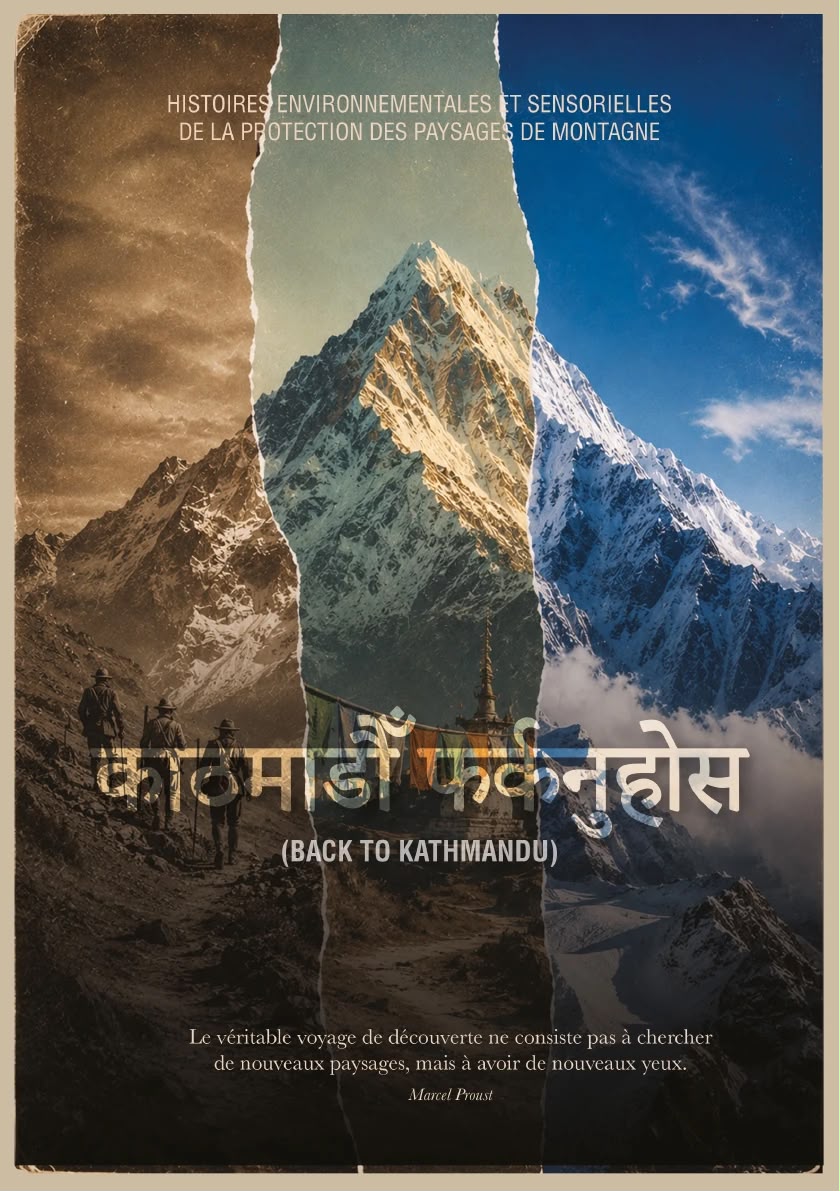
The team’s work is also meant to move beyond the archive. This year, researchers aim to document evidence and gather the views of different stakeholders. Next comes a documentary and a travelling installation, both developed with mountain communities and cultural institutions. Its title: Back to Kathmandu.
“Back to Kathmandu brings historical research into public life through a documentary and a travelling installation,” Hauser said.
In Pokhara, the team visited the International Mountain Museum with a simple but demanding task: listening. The project, Hauser explained, takes the 1982 declaration as its starting point—and uses its call to protect mountain environments and respect local communities as a lens for both past intentions and present concerns.
In Kathmandu, interviews were gathered around the UIAA General Assembly. In the Khumbu, the filming journey reached Namche to document local voices.
“The UIAA general assembly was also an excellent opportunity to connect, exchange ideas, strengthen international relationships, and celebrate our shared passion for mountaineering,” Hauser said.
For Nepal’s mountaineering community, the project arrives at a critical moment.
Phur Gelje Sherpa, president of the Nepal Mountaineering Association, said the Back to Kathmandu project under UIAA would inspire stakeholders to help protect the mountain ecosystem. It also offers a platform to discuss the challenges facing the Himalayan region and the global mountain environment, climate change, growing risks in high-altitude expeditions, the need for professional training and certification, and the importance of safety, sustainability and international cooperation.
In other words, the 1982 declaration is not just a document to be studied. It is a question to be answered, termed Hauser.

Comment