

 °C
°C By Foot in Chitwan - Exploring Nepal’s first national park
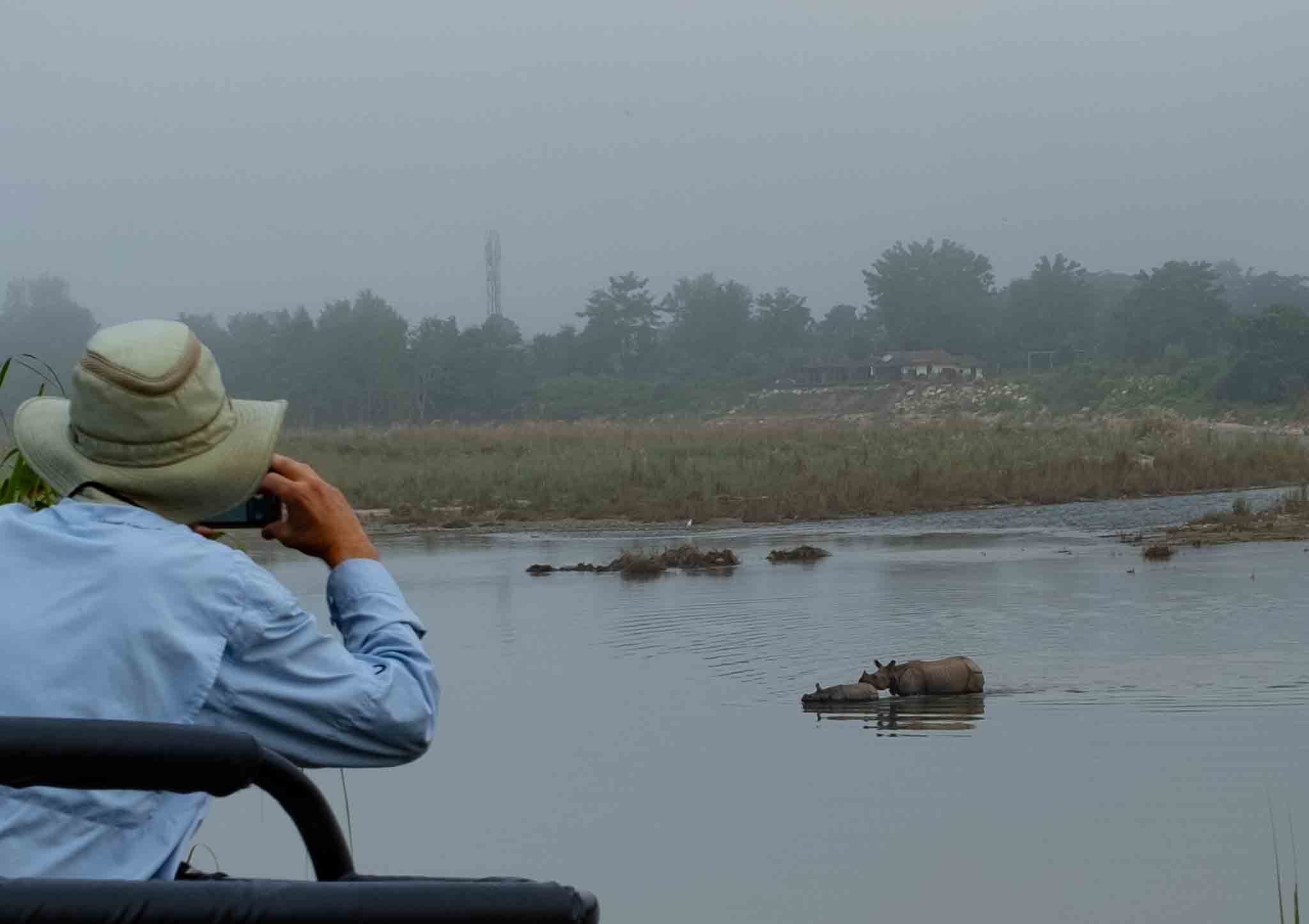
The leech-proof socks on my feet had captured all my attention, which wasn’t a good thing while trekking in the jungle. Despite wearing appropriate safari gear – khakis and wide-brimmed hat – these socks made me look like a dork on this hot and muggy afternoon in Chitwan National Park.
I quickly learned lesson No. 1 in jungle trekking; Keep your eyes peeled and don’t fixate on fashion.
Thankfully, Prava, a young guide-in-training, had her attention on the jungle and not her socks. Trailing behind, she was the first to see a flash of movement in the dense foliage. A sloth bear shuffled through the trees about 25 feet away as we stopped in amazement.
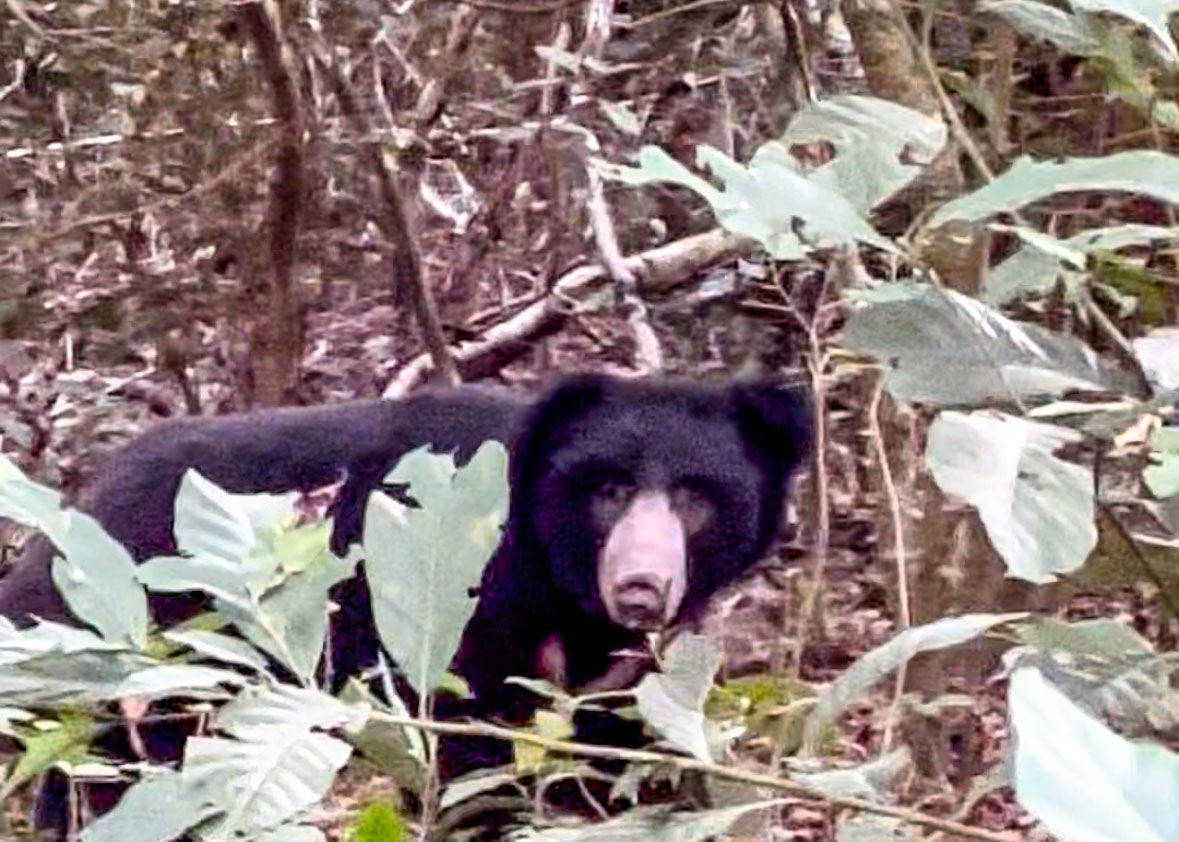
A cousin of the Himalayan black bear, the medium-sized Melursus ursinus circled a sal tree and let out a few primordial grunts, before it looked our way, offering an unobstructed view of its trunk-like snout, which resembles that of a sloth.
The bear shook off its shaggy coat, stood 6 feet on its hind legs, and charged at us, cracking branches along the way. The head guide, Jitaram (Jitu) Choudhary, quickly sprang into action, swinging his walking stick into some fallen logs and screaming, “YAAAA!” The sloth bear backed off and walked away.
“You are so lucky, man,” Prava said to me as we caught our collective breaths. She was one of a new wave of female guides emerging in Nepal. “I’ve been here a few months, and that’s the first one I’ve seen.”
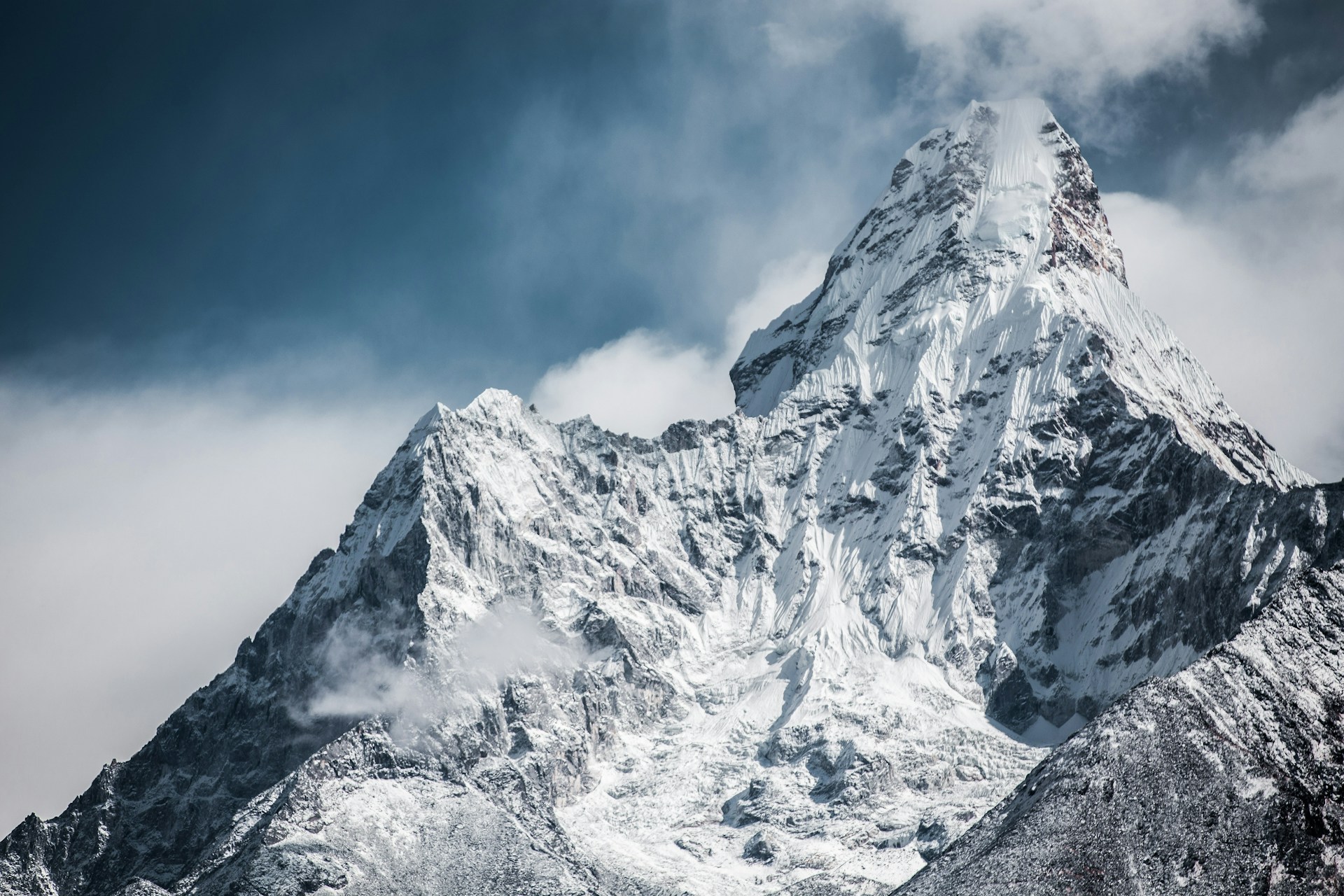
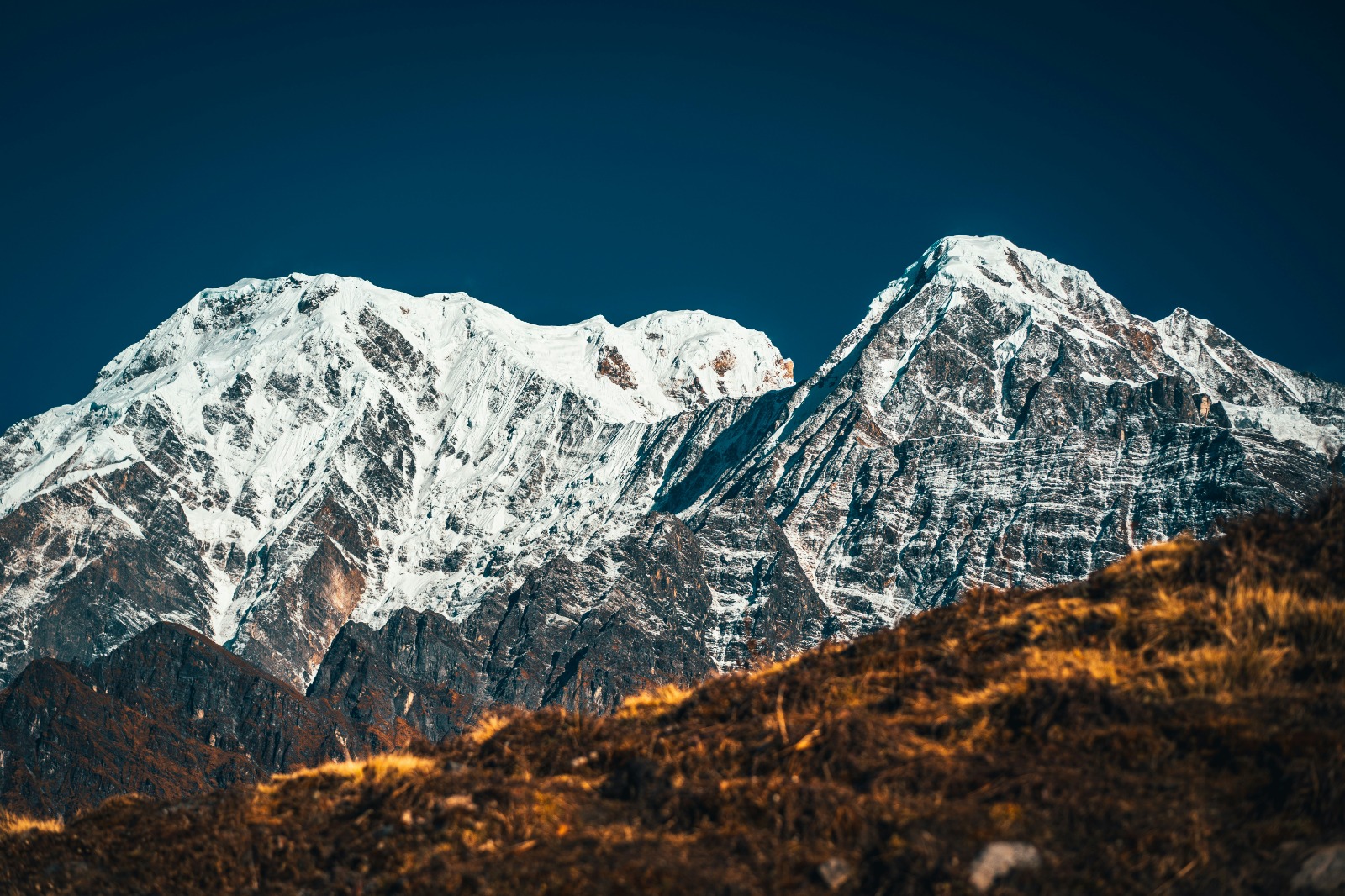
The initial image that often comes to mind when thinking of Nepal is snow-covered Himalayan peaks. Indeed, this small-sized country – sandwiched between Asian giants India and China – is home to eight of the ten tallest peaks on the planet.
There is another side of Nepal, though, that beckons to be explored. In the steamy, sub-tropical jungles of the Terai region, at an elevation of about 650 feet to 2,600 feet above sea level, lies Chitwan National Park, a UNESCO World Heritage Site and one of Asia’s top spots for wildlife viewing.
Established in 1973 as Nepal’s first national park, Chitwan is in the Narayani zone of southern Nepal. Many visitors tack on a few days at Chitwan after trekking in the Himalayas, which is exactly what I did.
The bear encounter was a tense but undeniably thrilling moment, and I was feeling fortunate to have seen such a rare species. Indeed, Jitu, who saved us from harm, agreed. “This time of year, a sloth bear is even more difficult to spot than a tiger.”
We continued our walking safari, as the setting sun shined on the Churia Hills, which march east to west and are the main topographic feature of the park. The flagship species of Chitwan is the greater one-horned Asian rhinoceros, which visitors often see in the park. However, the species that most sparks the imagination is the elusive royal Bengal tiger, which is a challenge to spot in the best conditions.
“It is very difficult to spot tigers this time of year,” said Jitu as we canoed down the Rapti River, which makes up the northern border of Chitwan, on my first of two nights in the Terai. The Reu River and Nepal-India border make up the southern flank of the park. “Summer is easier to spot tigers,” he said. “The grass is not as high as during winter.”
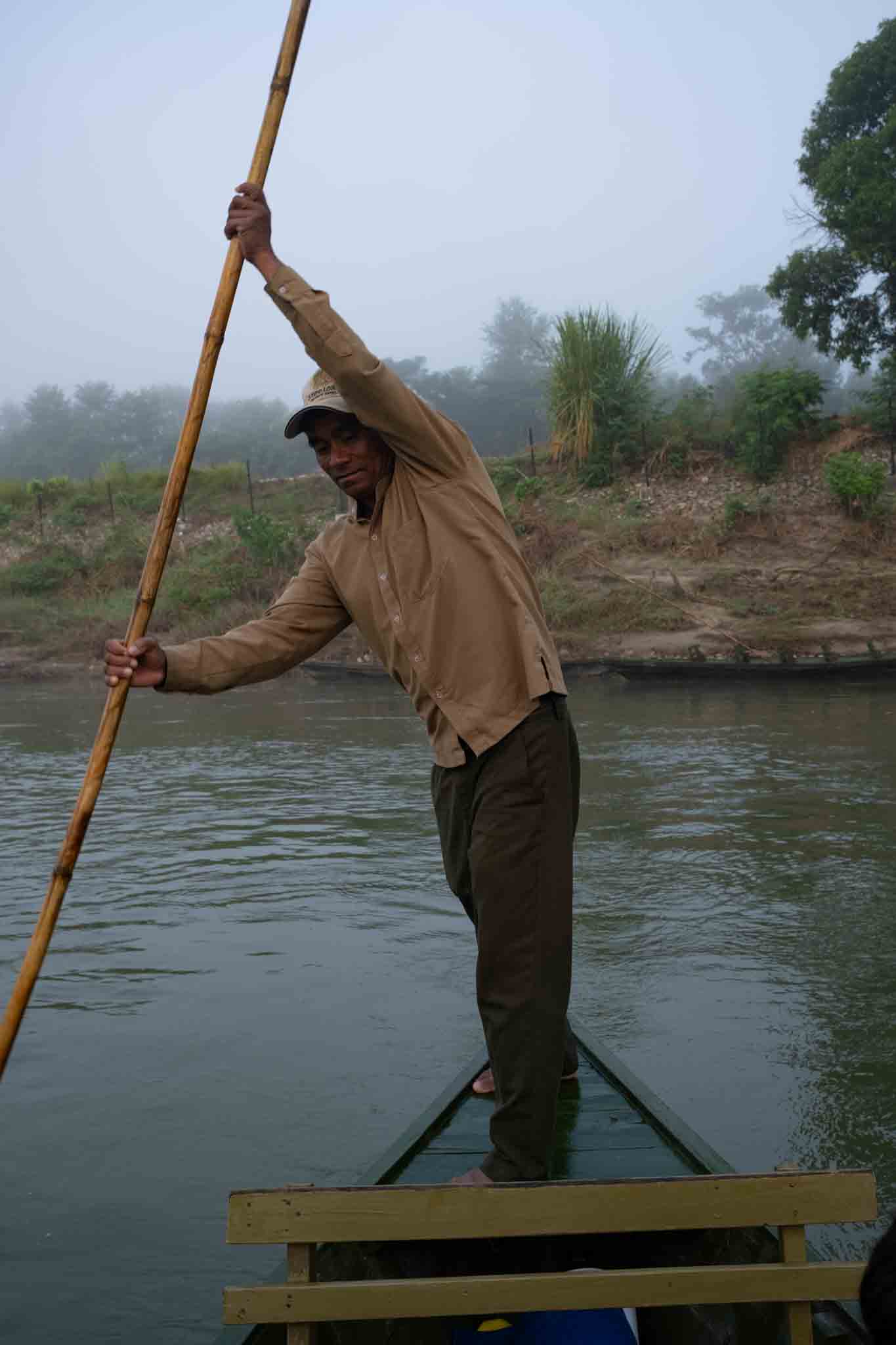
The canoe trip was organized by the Barahi Jungle Lodge, one of several retreats located on the river and along the park boundary. With 34 bungalow-style rooms set in a lush forest with more than 5,000 planted trees of various tropical species, the luxe lodge was the perfect base from which to explore Chitwan.
As we floated downstream, Jitu pointed out two species of crocodiles and several types of birds, including a grey hornbill with a blackish beak, a sparrow-sized kingfisher, and a multi-hued red jungle fowl. “In the park, we have 530 species of birds,” he said. I started a checklist of Chitwan species and quickly reached 20.
As I learned, Jitu was a member of the Tharu, the indigenous people of Chitwan. Nepal, a country of roughly 30 million, is home to over 140 ethnic groups speaking over 120 languages, according to a 2021 article in The Kathmandu Post.
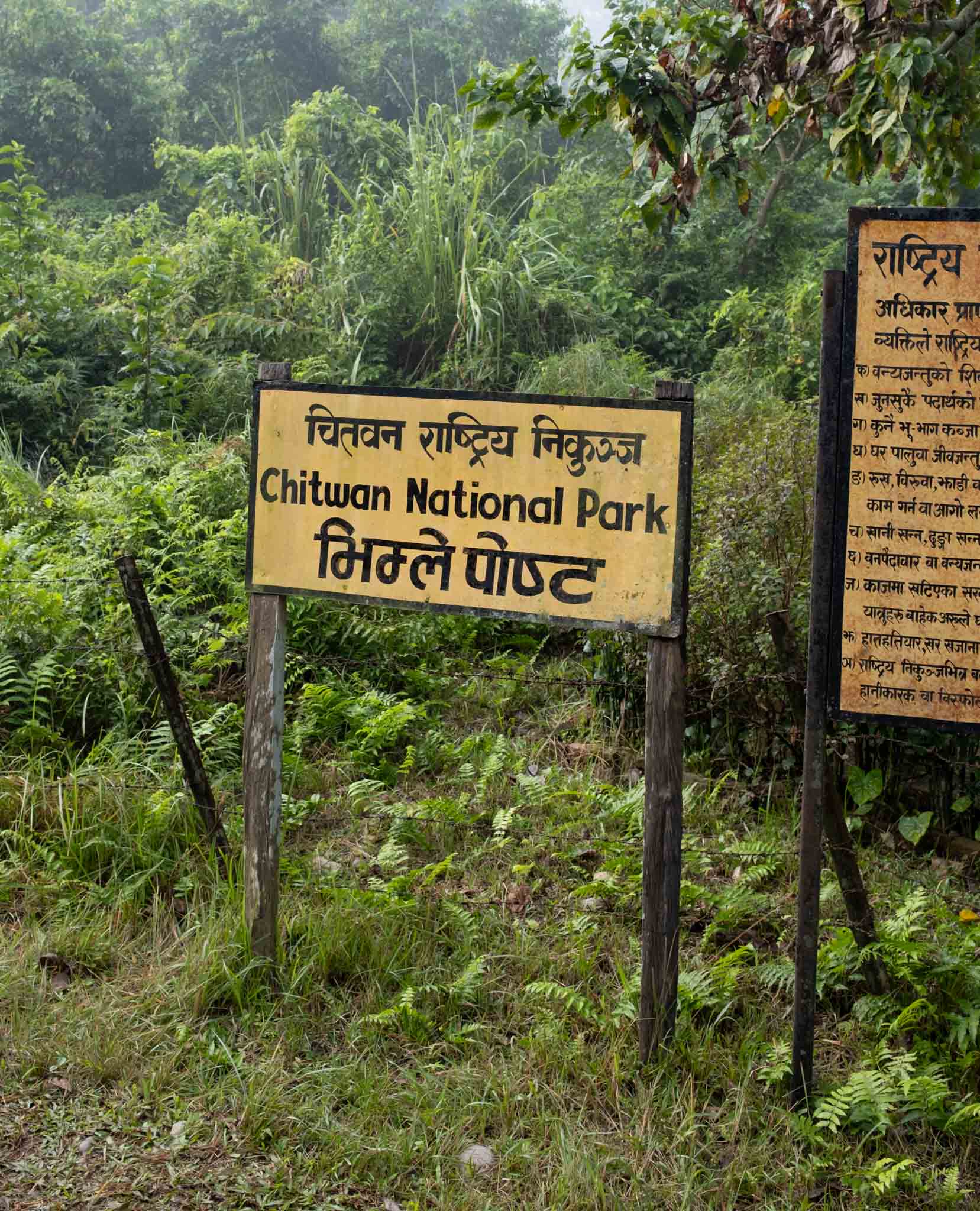
After a short time on the river, we retreated to a sandy knoll where we sat in lounge chairs, under the shade of umbrellas, and enjoyed steamed momos (the Nepali version of a dumpling) and kebabs as the sun descended into the western horizon. The tailored sundowner outing was nice, but not exactly the authentic experience I’d hoped for.
Jitu must’ve been reading my mind when he asked: “I think you would like to go on a walking safari with me, yes?”
The answer was an emphatic yes. I had been on a few walking safaris in the past – all in Africa – and found them to be exhilarating experiences. There is something visceral, enticing, and excitingly dangerous about seeing animals while on foot. We planned to meet at 3 p.m. the next day.
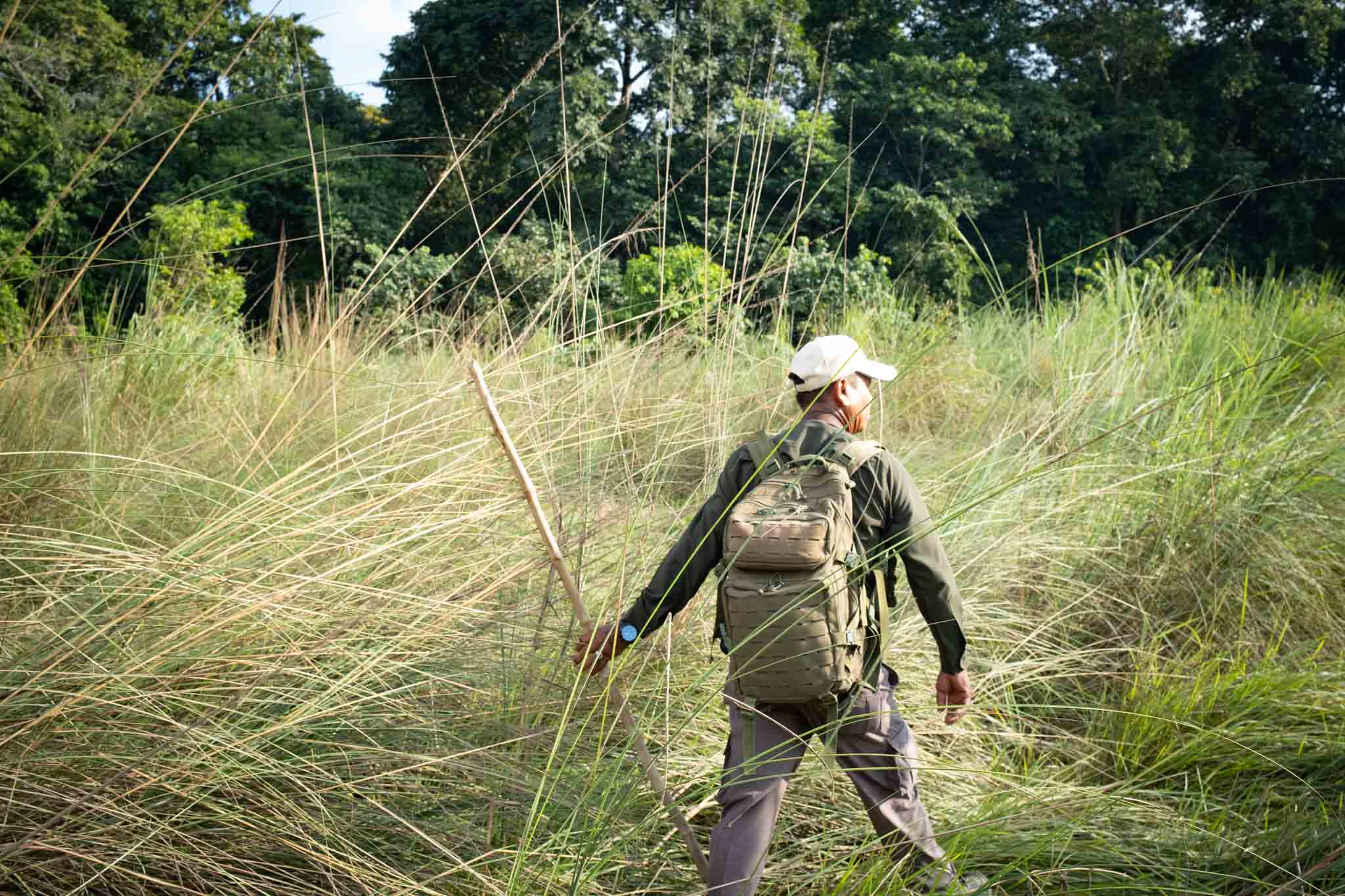
“Here, put these on,” said Jitu the following afternoon, handing me anti-leech socks to wear under my boots. Soon, we set off in a dugout canoe to the far side of the Rapti River and the Chitwan boundary. Our walking safari began as we hiked through tall elephant grass with Jitu blazing the trail.
“Now that we are walking, sometimes the animals will charge,” said Jitu, who has been a wildlife guide in Chitwan for over 30 years, having spent the bulk of that time working for Tiger Tops, the legendary lodge that pioneered safaris in this region – and predated the national park -- but is now closed.
“If that happens, don’t run away,” Jitu added regarding a charge. “I will give instructions, and you follow to me. We stay together, that’s the safest way.”
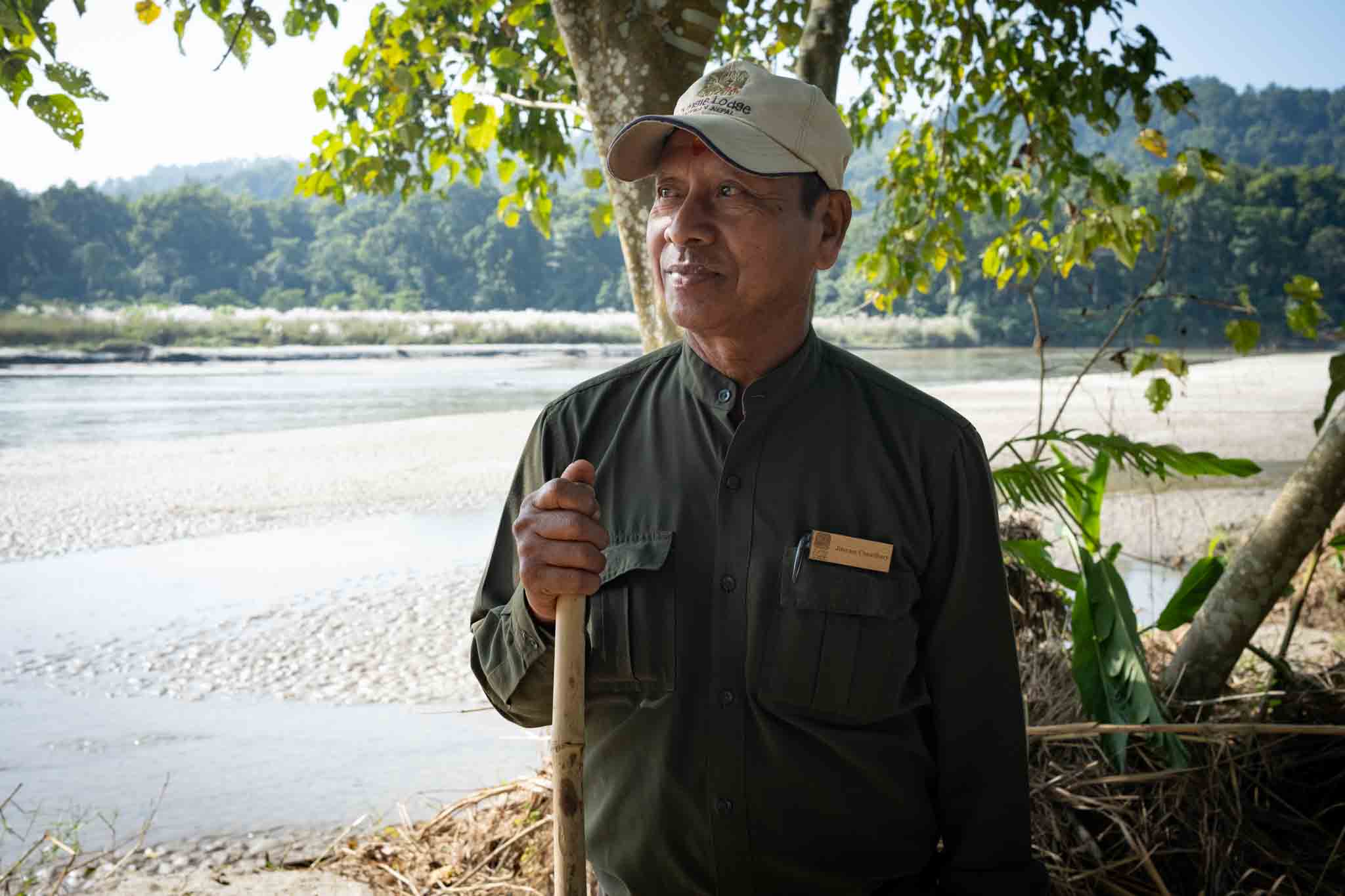
As we continued our walk, Jitu interpreted and identified some of the sights along the way: a termite nest that was eaten and turned into a resting hole by a sloth bear; an old footprint of a rhino; and scratch marks on a log that were distinctive of the apex predator in these parts.
“This is the mark of a tiger,” he said. “The tiger also makes pee on the log. You can smell it. It has a musky smell.” As I sniffed the tiger pee, Jitu explained the scent is both a territorial warning for other tigers to stay away, as well as a message to females in heat that he’s ready to mate.
Seconds later, we spotted the sloth bear. Just as Jitu had instructed, I stayed close behind along with guide-in-training Prava when the animal charged. Once the bear retreated, and we were safe, we had a moment to reflect on the tense encounter.
“Being a safari guide is actually quite a risky job,” he said. “Our main job is protecting the guests.”
Over the years, Jitu has had several close calls, including being charged by Ronaldo, the notorious wild bull elephant that’s killed over 20 people in the Chitwan area over the last dozen years. Still, he most enjoys traveling by foot through this wild region.
“Jeep safaris cover more ground, but during a walking safari we go through the jungle and the trees,” he said. “On foot is more dangerous, but I think it’s more exciting.”
The sloth bear was going to be hard to top, as my body was still tingling from the encounter. Then, Jitu led us to a nearby water hole, where we spotted two one-horned rhinos – a mother and her calf.
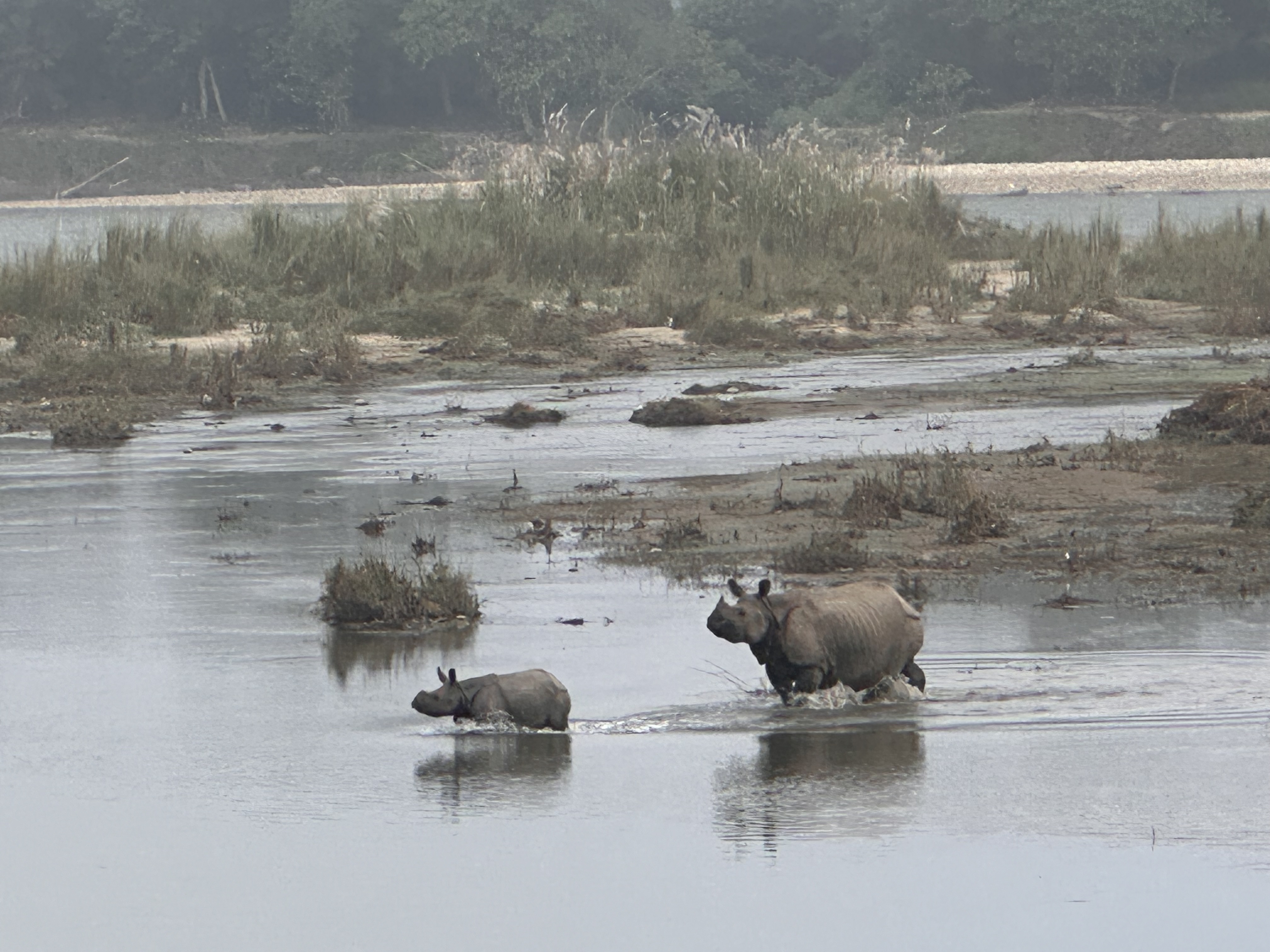
I stood in awe and admired these brownish-gray, prehistoric pachyderms with their massive tank-like bodies, stout legs, and single horns. Before me stood two of the roughly 2,100 mature Indian rhinos left on the planet.
“We go back,” Jitu whispered, tapping me on the shoulder. “We do not disturb them.” Together, along with Prava, we walked back to the river.
Chitwan: If you go…
Many travelers visit Chitwan National Park after completing their Himalayan trek. The nearest airport is in Bharatpur, about 10 miles away. Buddha Air offers flights from both Kathmandu and Pokhara. For more information, visit https://www.buddhaair.com/
Barahi Jungle Lodge (https://barahi.com/properties/barahi-jungle-lodge/ ) offers 34 deluxe rooms with riverfront views and activities such as jeep safaris, canoe trips and jungle walks.
Budget hotels, restaurants and tour operators can be found in the nearby town of Sauraha, where a resident rhino wanders the streets and is known as a destroyer of local crops.

Comment