Aviation

T3 EXCLUSIVE: Nepal cancels DJI FlyCart 100 permit, blocks FreeFly Drone as US-China tech battle plays out on Everest
T3
By Tourism Times
Published at : 2 May 2026, 7:06 PM

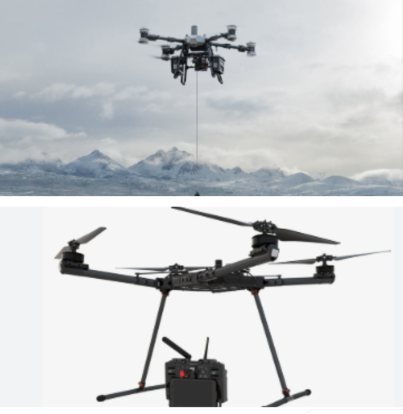
KATHMANDU: Nepal's Home Ministry has cancelled the flight permit of the Chinese DJI FlyCart 100 drone in the Everest region and refused to grant authorisation for the American FreeFly Alta X Gen 2 — effectively grounding two of the most capable heavy-lift drones available for high-altitude operations on Everest — in a regulatory decision that has drawn the world's drone rivalry directly into the Himalayas.
 
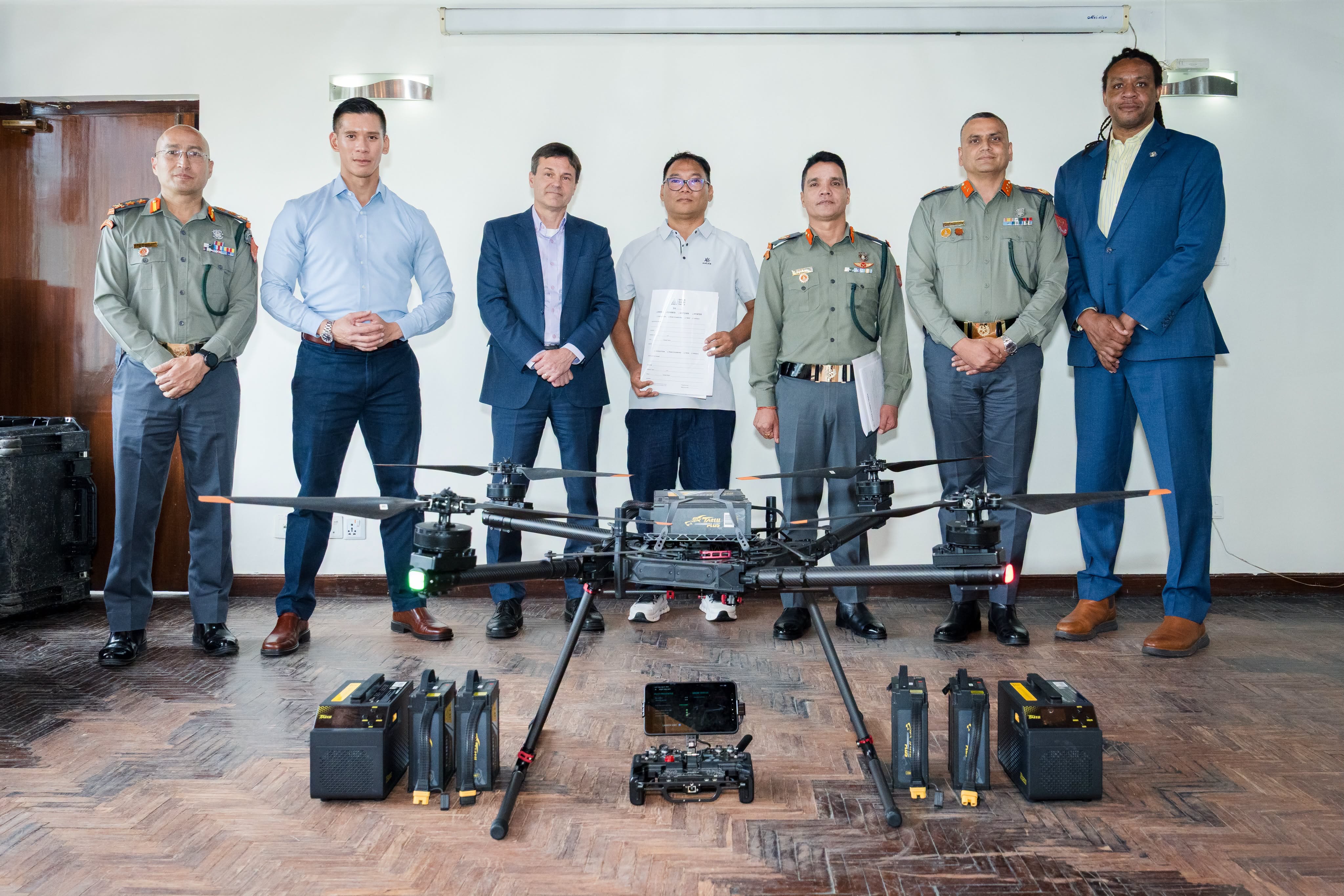
In a letter dated April 30 and addressed to the District Administration Office, Solukhumbu, the Home Ministry's Local Administration and Province Coordination Division instructed authorities that Airlift Technology Pvt. Ltd.'s application for permission to fly the FreeFly Alta X Gen 2 (Category C) drone could not be approved, citing concerns related to the Unmanned Aerial Vehicle Operations Regulations, 2075 and security sensitivities requiring wider stakeholder consultation. 
 
In the same communication, the ministry also cancelled the flight permit for the DJI FlyCart 100 (Category D) drone — a permit that had previously been granted to the company on December 5, 2025. The cancellation was issued as a secretary-level decision made on April 30. The letter was copied to the Ministry of Culture, Tourism and Civil Aviation, Khumbu Pasang Lhamu Rural Municipality, and Airlift Technology Pvt. Ltd.
 
The timing is significant. 
 
The cancellation comes even as China's DJI, the world's dominant drone manufacturer, has been publicly celebrating what it described as the world's first drone delivery on Everest, carried out in April using its FlyCart 30 model in partnership with Nepali Airlift, 8KRAW, and local guides. The test involved delivering three oxygen bottles and 1.5 kg of supplies from Everest Base Camp to Camp I and returning with trash — a 12-minute operation that would take a human porter six to eight hours through the Khumbu Icefall. 
 
The FreeFly Alta X Gen 2, by contrast, is an American-manufactured drone from FreeFly Systems — meaning Nepal's regulatory action effectively blocks a US drone while Chinese drone operations had already been conducted in the same airspace. However, United States Special Envoy for South and Central Asia Sergio Gor on Friday officially unveiled the “Ultra X Gen 2” drone built by Freefly Systems at Everest Base Camp. Officials added that it will become fully operational only after completing the necessary permission process.
 
The DJI FlyCart 100, the larger, more powerful successor to the FlyCart 30, is a formidable piece of machinery. With a maximum takeoff weight of 170 kg, a maximum payload capacity of around 100 kg under optimal conditions, a top horizontal speed of 20 m/s, and a maximum certified flight altitude of 6,000 metres above sea level, the FlyCart 100 was being eyed for what would have been a significant expansion of drone logistics on Everest. 
 
Its predecessor, the FlyCart 30, had already been used by the Sagarmatha Pollution Control Committee and Khumbu Pasang Lhamu Rural Municipality to ferry loads and collect garbage on the mountain, delivering over 1,200 kg of oxygen, ropes, and ladders in recent seasons and removing over 300 kg of waste from Camp I in a single season.
 
The operational case for heavy-lift drones on Everest has been building steadily. 
 
In the Spring 2025 season, Airlift Technology's drones, operated in partnership with SPCC under an MoU signed in August 2024, carried over 2.5 tonnes of equipment across the Khumbu Icefall to Camp I and back, including 444 kg of icefall route-fixing equipment, 900 kg for the 8K rope-fixing team, and over 150 oxygen cylinders. The drones also set a new altitude record for UAV operations, reaching 6,130 metres on Everest. In that season, no icefall doctor was required to carry ladders or rope-fixing equipment through the icefall by hand for the first time in history.
 
The FreeFly Alta X Gen 2, the American drone whose permit application was denied, is a professional-grade cinema and payload UAV capable of carrying heavy loads and operating in challenging conditions, though its specifications are considerably below the FlyCart 100's heavy-lift capacity.
 
The Home Ministry's decision leaves Airlift Technology without authorisation for either of the two drones it had sought to operate in the Everest region this season, at a time when the Spring 2026 season is fully under way with 464 climbers permitted on Everest alone. 
 
SPCC and Khumbu Pasang Lhamu Rural Municipality, both of which have been active partners in the drone programme, have not yet publicly commented on the permit cancellation and its operational implications for the season. “They were planning to ferry loads to Camp II and collect garbage from the high camps using these drones.”
 
The regulatory action raises broader questions about Nepal's approach to drone governance in its most sensitive and internationally watched mountain environment — and about which countries' technology will be permitted to operate in the airspace above the world's highest peak.
Tags: #Technology

Comment