Environment

Record low Himalayan snowpack for fourth year running raises alarm for mountain rivers and trekking water sources
Record
Photo Courtesy: ICIMOD
By Tourism Times
Published at : 25 Apr 2026, 3:48 PM

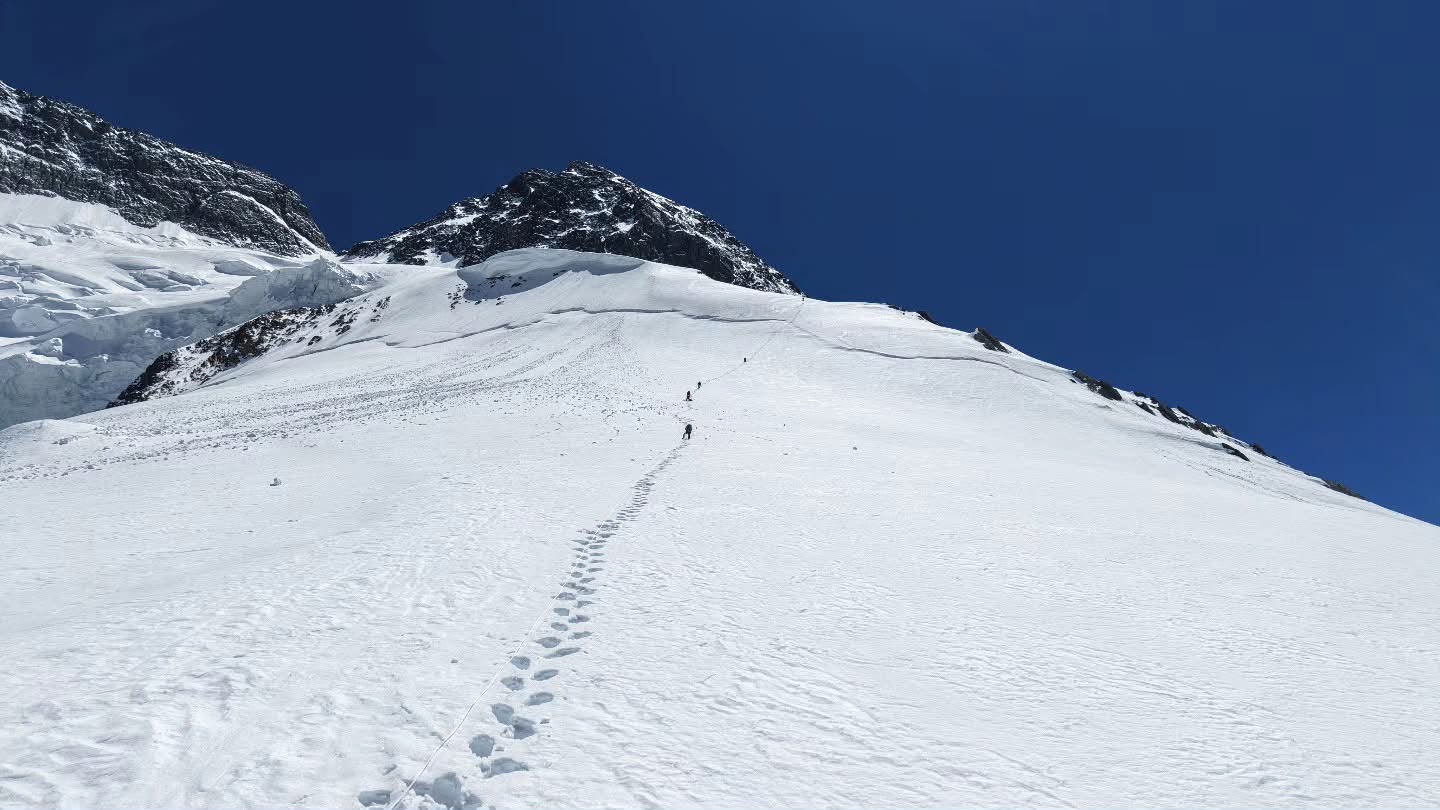
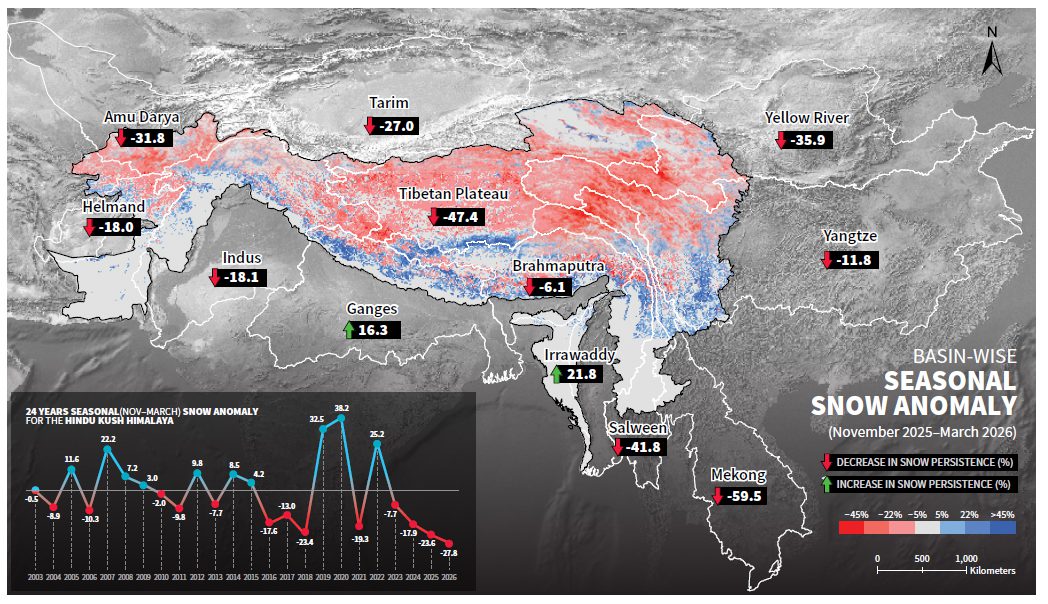
KATHMANDU: The Hindu Kush Himalaya recorded its lowest snowpack in 24 years of monitoring in 2026, falling 27.8 percent below the long-term average for the fourth consecutive year, raising fresh concerns about water availability across the mountain region — including for trekking routes, high-altitude settlements and the river systems that sustain Nepal's valleys and lowlands.

The Snow Update Report 2026, released Thursday by the International Centre for Integrated Mountain Development (ICIMOD) in Kathmandu, found that ten of the 12 major river basins originating in the HKH now have below-normal snow persistence. The Mekong, Tarim and Tibetan Plateau have hit their lowest levels in the entire monitoring record. The Ganges, at plus 16.3 percent, and the Irrawaddy, at plus 21.8 percent, were the only two basins above normal.

For Nepal's mountain and trekking economy, the findings carry particular relevance. Reduced snowmelt means lower spring river runoff, affecting water availability for communities along major trekking corridors and in downstream valleys. Hydropower generation — critical to Nepal's energy supply — is also expected to be affected, with below-normal generation anticipated in early summer on several key basins including the Brahmaputra system.

Four consecutive years of below-normal snowpack have also prevented groundwater and soil moisture from replenishing, a trend that scientists warn will make each successive dry spell more damaging than the last. "The 2026 numbers confirm a breaking point," said Sher Muhammad, lead author of the report. "Ten out of twelve basins are below normal, and several have hit their lowest recorded persistence in two decades."

ICIMOD urged immediate activation of drought preparedness plans, integration of real-time snow data into water management decisions and stronger transboundary cooperation on shared Himalayan water resources, warning that the window for proactive governance is narrowing with each passing season.

Tags: #Environment

Comment