Environment

WWF Nepal marks Earth Hour 2026 with runs, candlelight dinners and a nationwide push for conservation
WWF
Courtesy: WWF Nepal
By Tourism Times
Published at : 29 Mar 2026, 3:54 PM

KATHMANDU: WWF Nepal transformed Earth Hour 2026 into a nationwide people's movement, bringing together runners, restaurateurs, students, tech companies, and local communities across the country in a series of events that went well beyond the symbolic switching off of lights.

Plastic-free runs take over Kathmandu
The centrepiece of Kathmandu's Earth Hour campaign was a series of three plastic-free runs organised in partnership with Meltdown. Two mid-week runs on March 18 and 25 each drew over 100 participants, building momentum through a mix of fitness and environmental awareness.

The first run, organised in collaboration with Khaalisisi, invited participants to bring e-waste for responsible recycling, followed by an interactive session on waste management. The second deepened the conversation around wildlife protection and environmental threats.

The series culminated on March 28 with a grand finale run at which more than 300 participants took to the streets for 3 km and 5 km routes before gathering at Narayanchaur Park for a mini carnival featuring art installations, pledge signing, painting, treasure hunts, and immersive games.

Nepal's first fish sanctuary gets its own run — in Bardiya
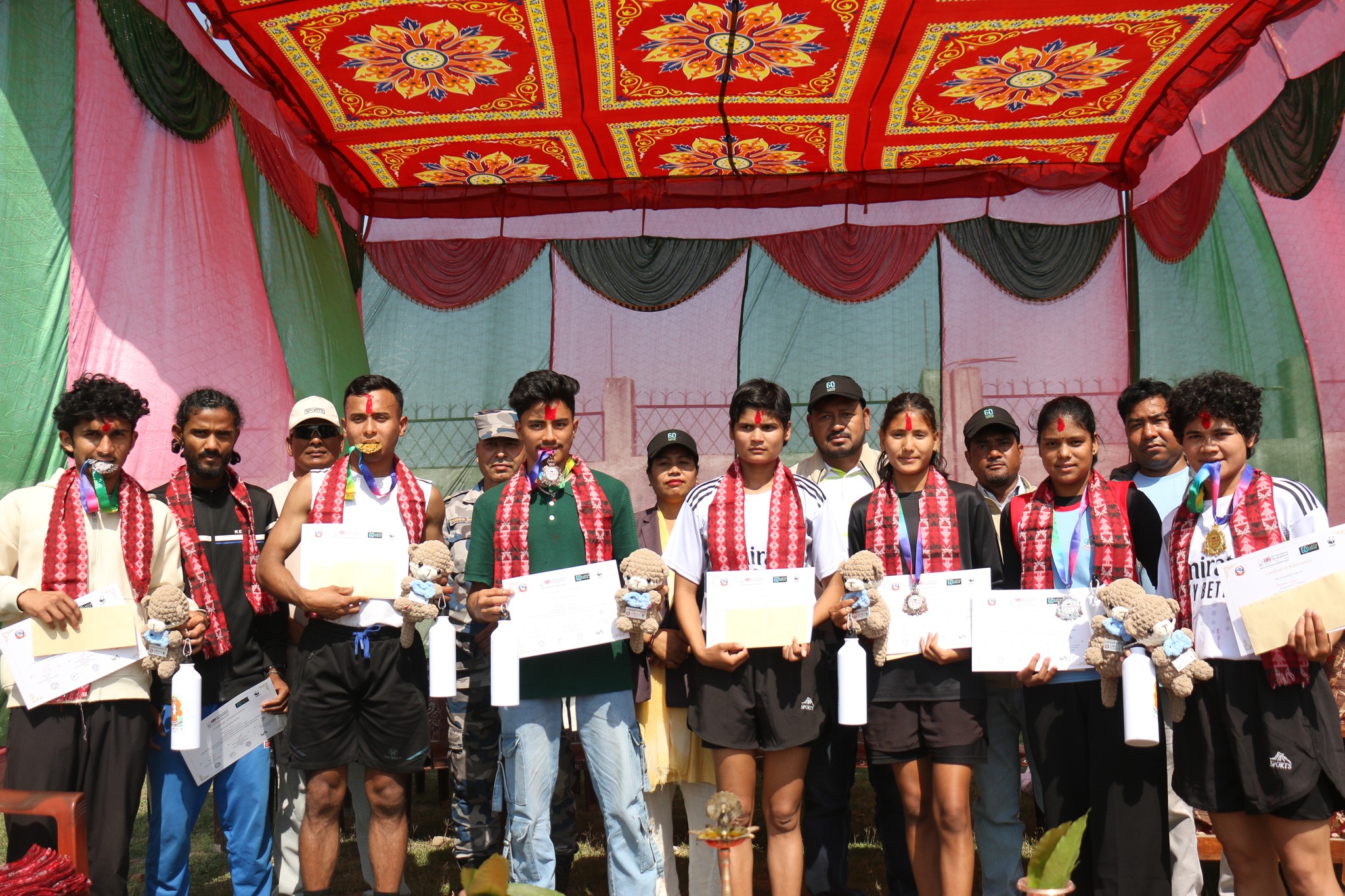
Beyond Kathmandu, WWF Nepal extended the Earth Hour spirit to Rajapur in Bardiya, where 50 runners completed an 11.2-kilometre "Sakhi Fish Sanctuary Run" — a distance chosen deliberately to match the perimeter of the Sakhi Fish Sanctuary, Nepal's first designated fish sanctuary.

Starting at 6:30 am from Rajapur Stadium, the run aimed to raise awareness about freshwater ecosystems and aquatic biodiversity conservation along the Karnali river system. The event was organised under a UK Government-funded Darwin Initiative project focused on strengthening community stewardship for otter conservation, in collaboration with Sonaha Bikas Samaj and the Dolphin Conservation Center.

In the men's category, Durga Bahadur Thapa claimed first place with a time of 36 minutes 39 seconds, edging out Narendra Dani by a single second. Tek Bahadur Chand finished third in 37 minutes 07 seconds. In the women's category, Kalpana Pant won in 44 minutes 24 seconds, followed by Debaki Kumari Bam in 44 minutes 42 seconds and Apsara Bam Thakuri in 49 minutes 02 seconds.

Restaurants, eSewa and Ncell join the movement
Thirteen restaurants across Kathmandu — including Roadhouse Cafe, Mezze by Roadhouse, Le Sherpa Restaurant, La Casita, Piano Piano, and Hard Rock Cafe — hosted candlelight dinners from 8:30 pm to 9:30 pm, inviting the public to pause and reflect during the Earth Hour window.

On the digital front, WWF Nepal partnered with eSewa, which carried an Earth Hour banner on its app — reaching over one million daily users — and co-launched a hackathon exploring solutions at the intersection of fintech and environmental conservation. Ncell extended the campaign's reach further through joint social media efforts across the country.

Youth at the forefront
Young people played a central role in this year's Earth Hour. An eco-club art competition saw students from across Nepal express their vision for a sustainable future, with Urmila Nath from Shree Shaheed Smriti Secondary School in Kailali taking first place and Anuska Mahato from Shree Secondary School, Chitrasari as runner-up.

The Eco Innovation Challenge, focused on turning waste into practical environmental solutions, was won by Creative Academy School in Kirtipur.

Tags: #Environment

Comment