The Tourism Times | Breaking tourism-related news from Nepal and beyond
°C
T3 Special
CIB arrests six in fake helicopter rescue scam
File Photo
By
Tourism Times
Published at : 26 Jan 2026, 11:58 AM
Travel agency executives face charges over $19.65 million insurance fraud
KATHMANDU: The Central Investigation Bureau (CIB) of Nepal Police has arrested six senior executives from three prominent travel and mountain rescue companies in what investigators describe as a massive insurance fraud operation that defrauded international insurers of more than $19.65 million.
The Central Investigation Bureau (CIB) announced the arrests at a press conference on Sunday, revealing what investigators describe as a well-coordinated network that exploited Nepal's trekking industry to file fraudulent rescue claims.
Additional Inspector General Dr. Manoj Kumar KC, who heads the CIB, said the suspects face charges including organized crime, fraud, money laundering, and offenses against national interest under Section 51 of the Muluki Criminal Code 2074. All six were taken into custody on January 25 following court-issued arrest warrants from Kathmandu District Court.
The accused
The arrested individuals are:
Jayaram Rimal and Bibek Pandey from Mountain Rescue Service Pvt. Ltd.
Rabindra Adhikari and Bibekraj Thapaliya from Nepal Charter Service Pvt. Ltd.
Mukti Pandey and Subhash KC from Everest Experience and Assistance Pvt. Ltd.
All hold director or senior management positions at their respective firms.
How the scam worked
According to the CIB's preliminary investigation, the fraud involved sophisticated document forgery at multiple levels. The accused companies allegedly altered and forged official records from the Ministry of Culture, Tourism and Civil Aviation, the Civil Aviation Authority, and airport authorities.
Investigators revealed that the perpetrators falsified Passenger and Cargo Manifest documents and prepared fraudulent invoices to create the appearance of legitimate rescue operations. They then submitted forged hospital admission and discharge reports, along with fabricated medical records, to international insurance companies to substantiate their claims.
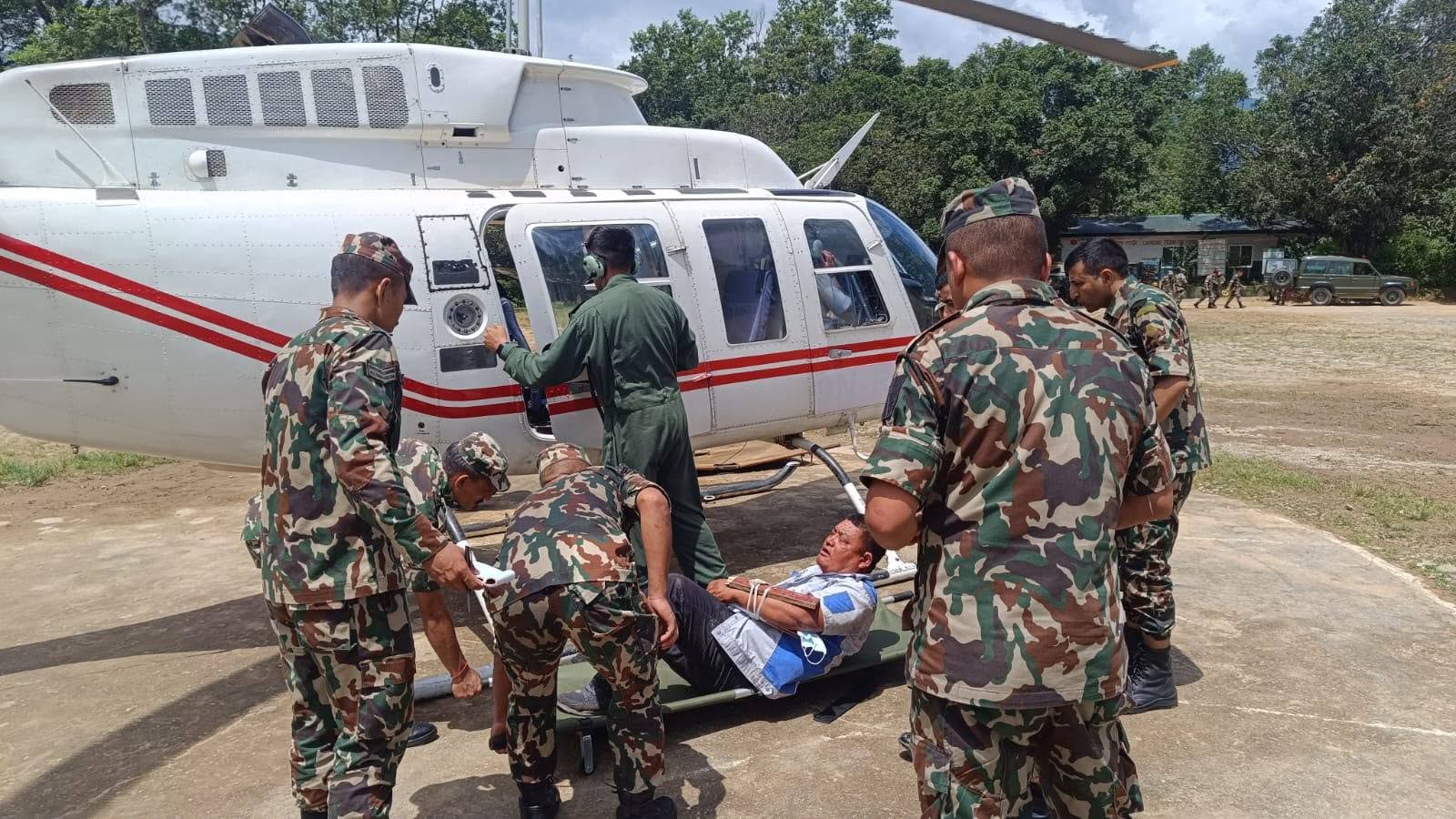
The scheme involved collaboration among trekking guides, helicopter operators, and medical facilities. Trekkers experiencing minor altitude-related discomfort were allegedly pressured into unnecessary helicopter evacuations. In other cases, multiple patients were transported on single flights but billed separately to different insurance companies at full cost per person.
Scale of the fraud
CIB data reveals the extent of the fraudulent operations across the three companies:
Mountain Rescue Service conducted 1,248 rescue operations, of which 171 were allegedly fabricated, resulting in insurance claims exceeding $10.3 million.
Nepal Charter Service carried out 471 rescues, including 75 fake cases, claiming $8.2 million from insurers.
Everest Experience and Assistance performed 601 rescues, with 71 identified as fraudulent, involving claims totaling $1.15 million.
In total, investigators identified 317 fake rescues out of 2,320 operations examined.
Ongoing investigation
"The investigation has uncovered a well-organized network engaged in crimes against the national interest," AIG KC stated. "We have received additional complaints about fake rescue operations, and several aspects continue to be revealed during our investigations."
Authorities indicated that further arrests are expected as the probe continues, suggesting the scandal may involve additional individuals and companies in Nepal's tourism sector.
Damage to Nepal's tourism reputation
The scandal has already inflicted serious damage to Nepal's international standing as a premier trekking destination. According to the CIB, international insurance companies and global tourism organizations have circulated notices labeling Nepal a "NO GO DESTINATION FOR TOURIST" and suggesting the country be removed from recommended tourist destination lists.
International news agencies have published reports with headlines such as "A scam on the roof of the world" and "Stop providing cover to tourists travelling to Nepal," undermining the country's reputation in the lucrative adventure tourism market.
The case highlights growing concerns about exploitation within Nepal's trekking and mountaineering industry, which attracts hundreds of thousands of international visitors annually and serves as a critical source of foreign revenue for the Himalayan nation.


 °C
°C .jpeg)

Comment