

 °C
°C Gathemangal Festival brings Bhaktapur to life with tradition and fire
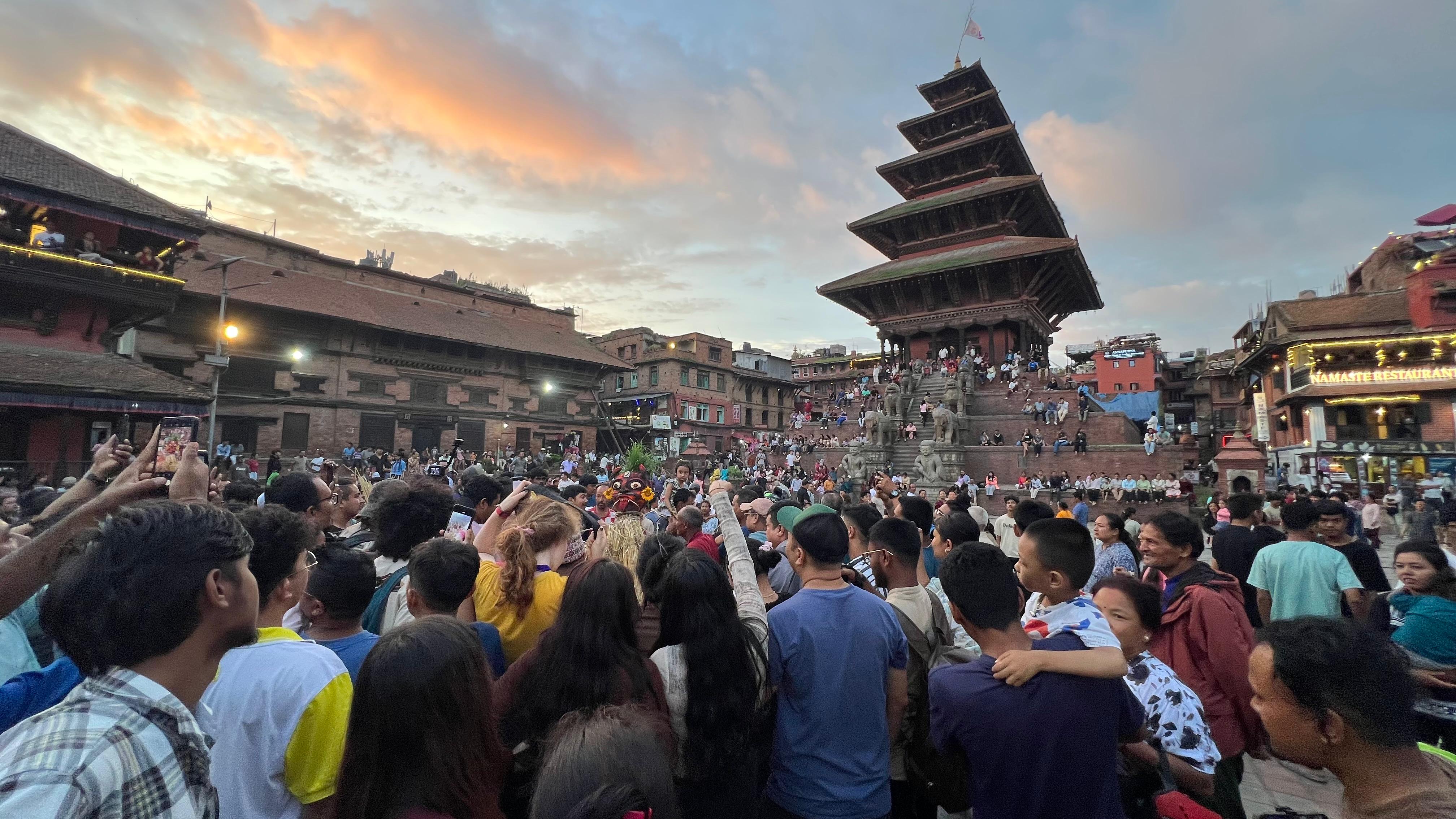
BHAKTAPUR: The ancient city of Bhaktapur came alive on Tuesday (July 23) as locals from the Newa community celebrated the Gathemangal festival with enthusiasm, colour, and community spirit.
The festival, also known as Gathamuga or Ghantakarna Chaturdashi, is marked every year on the 14th day of the waning moon in the Nepali month of Shrawan.
At the heart of the celebration is the burning of a large straw effigy representing a demon named Ghantakarna. Made from reeds, straw, taro leaves, and nanglo (a bamboo-matted tray), the effigy often takes the shape of a giant figure resembling an elephant. The symbolic burning is believed to cleanse the community of evil spirits and negative energies.
Traditionally, the effigy is set up at a major junction in each locality and burned at dusk, accompanied by traditional music, dancing, and cheers. As the demon goes up in flames, women perform a purification ritual at home, cleaning rooms, burning incense, and preparing small rituals to drive away spirits.
According to local legends, Ghantakarna was a fearsome demon who terrorized villagers, especially women and children, and demanded offerings. With a terrifying appearance, painted red, blue, and black—he wore large bells on his ears, which gave him his name (ghanta meaning bell, karna meaning ear). Myth has it that a frog helped drown the demon during the monsoon, leading to the celebration of his defeat.
As part of the rituals, families prepare a makal, a clay pot filled with charcoal, herbs, nails, and paper charms. It is lit and waved around rooms to ward off evil spirits. Special food offerings like rice, garlic, raw meat, and spices are also placed at entrances.
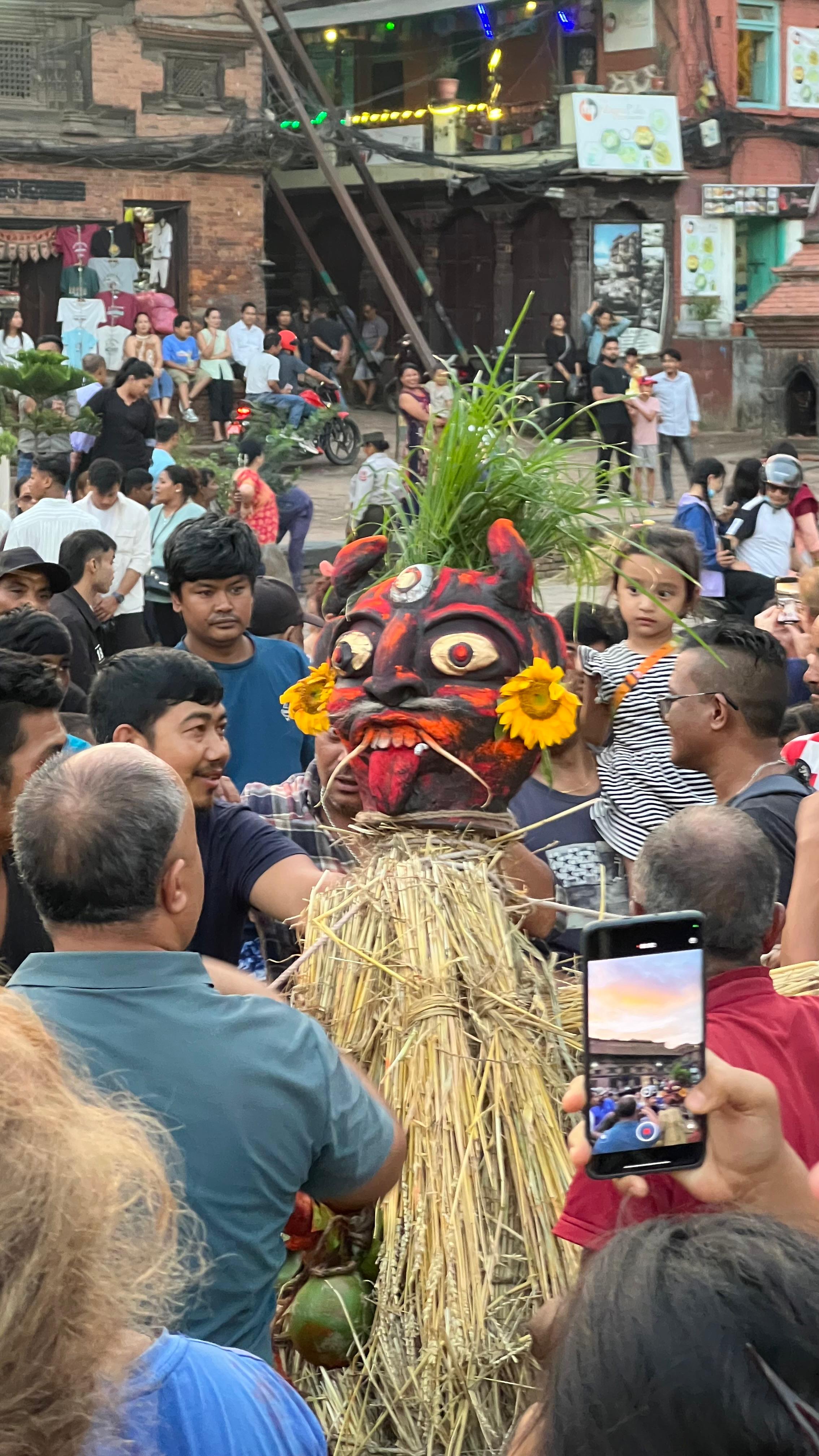
Photo Courtesy: Kriti Joshi
Children, considered more vulnerable to bad spirits, are sometimes made to step over a burning straw pile, believed to protect them for the year ahead. In the evening, one person painted head to toe roams the community dressed as the demon, accompanied by others with torches, collecting alms or food.
The festival also carries a deeper message about cleanliness. Locals collect funds to build the effigy, and the act of taking it away from the settlement to burn it symbolises the removal of waste and negative forces from the community.
While most stories depict Ghantakarna as a villain, some versions acknowledge the demon as once being helpful during a shortage of manpower in the valley’s rice fields. But when he and others began demanding too much in return, the villagers had to chase them away.
Whether as a celebration of cleansing or a tribute to old beliefs, Gathemangal continues to connect Bhaktapur’s people with their past—and with each other.






Comment